
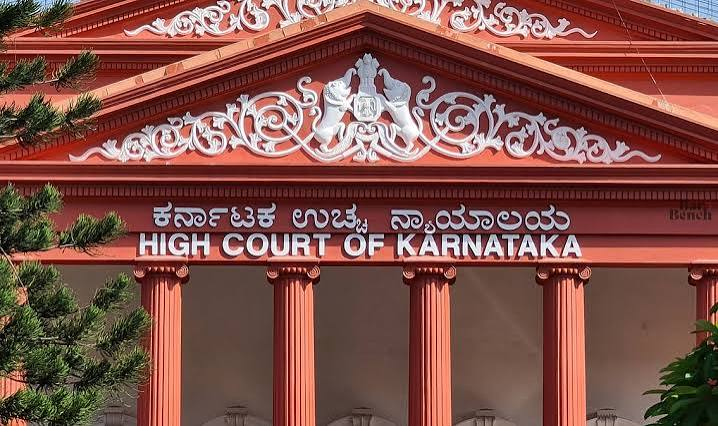
BENGALURU — In a major setback for Bengaluru-based realty player Ozone Urbana Infra Developers, the High Court of Karnataka has dismissed a clutch of petitions seeking to quash criminal proceedings and two Enforcement Directorate (ED) investigations over alleged financial diversion and large-scale homebuyer fraud.
Delivering the order, Justice M. Nagaprasanna rejected the petitions filed by the developer, its promoter Vasudevan Sathyamoorthy, his spouse Priya Vasudevan, and associated entities. The bench also effectively upheld the federal anti-money laundering agency’s provisional attachment order against company assets valued at ₹423.38 crore.
The ruling underscores intensifying legal scrutiny surrounding structured subvention finance schemes and establishes that deceptive diversion of developmental capital cannot be sheltered under the guise of ordinary commercial disputes.
Allegations Transformed Civil Delay into Criminal Conduct
The legal proceedings stem from a series of complaints filed by retail investors and flat purchasers. According to the bench, the case documents revealed a systematic operational pattern: buyers were aggressively onboarded through tripartite subvention models that promised zero pre-EMIs until possession, only to face project abandonment and unfulfilled financial obligations.
In one highlighted transaction, a residential flat booked in 2017 was subsequently resold to an unrelated third party in 2021 without the original buyer’s knowledge or consent.
Drawing a sharp line between contractual delays and intentional deception, the court observed:
“The money is received, the property is not delivered, the loan burden remains with the homebuyer, and the very property promised to him is allegedly sold to another. Such allegations travel far beyond the realm of a mere contractual default.”
Justice Nagaprasanna noted that economic offences inflict widespread damage on market integrity, primarily penalizing middle-class homebuyers who direct life savings into real estate assets.
Predicate Offence Defense Fails Under CBI Scrutiny
Legal counsel representing Ozone Urbana argued that the money laundering proceedings against Ozone Urbana initiated under the Prevention of Money Laundering Act (PMLA) could not survive, claiming the underlying predicate police FIRs were either stayed or dismissed.
The court rejected this argument, clarifying that the ED’s 2025 Enforcement Case Information Report (ECIR) remains firmly anchored in a separate Central Bureau of Investigation (CBI) case. The CBI registered the FIR following directives from the Supreme Court of India, which ordered an expansive probe into alleged institutional collusions between private real estate developers and non-banking financial companies (NBFCs).
According to investigative findings, Ozone Urbana coordinated with key officials at Indiabulls Housing Finance (subsequently rebranded as Sammaan Capital) to push lucrative “No Pre-EMI” schemes. Financial institutions disbursed construction capital directly to the builder without standard milestone-linked due diligence. Once the developer defaulted on its pre-EMI commitments, the lenders transferred the debt recovery pressure directly onto individual buyers.
₹423 Crore Asset Attachment and Siphoning Trail
The High Court’s refusal to interfere keeps the ED’s October 4, 2025 provisional attachment order fully operational. The order freezes ₹423.38 crore in tangible assets, including:
- Substantial unsold apartment inventory in North Bengaluru
- Prime commercial and residential land banks held by the developer
- Strategic personal holdings attributed to the primary promoters
According to the Enforcement Directorate, the builder collected roughly ₹927.22 crore from over 1,351 prospective homeowners. Forensic scrutiny revealed that substantial capital was systematically diverted away from construction escrow mechanisms into sister companies and personal family accounts.
With the legal challenge dismissed, both the federal agencies and the lower trial courts are cleared to accelerate criminal proceedings and examine corporate governance failures across the developer’s ecosystem.